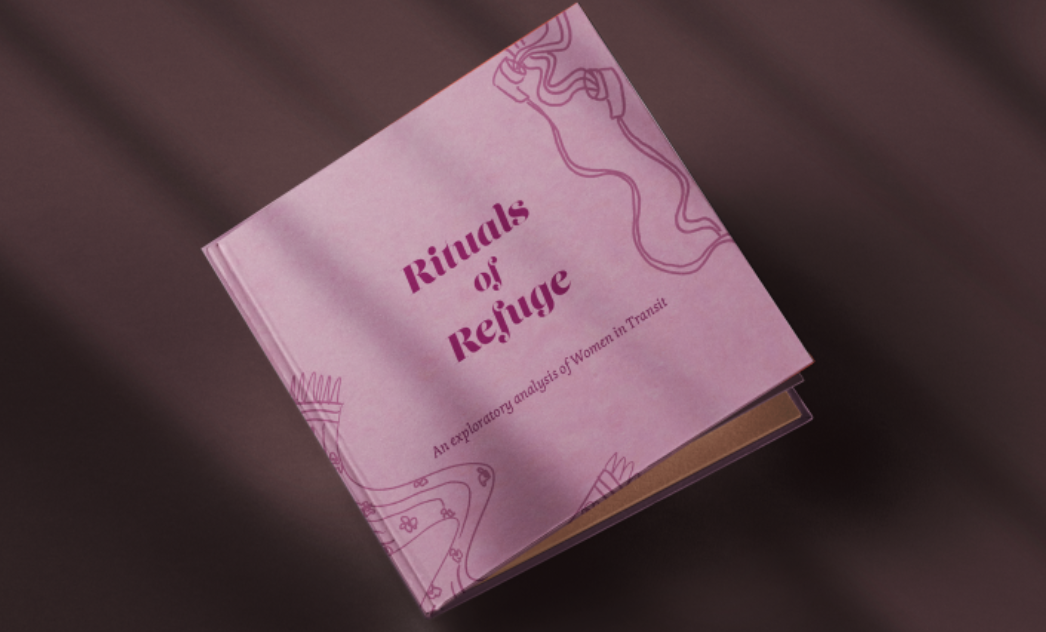
A thesis research project exploring how women navigate public transit in India — documenting invisible strategies, emotional labour, and the daily rituals women perform to feel safe in shared spaces.
The goal is to raise awareness and promote behavioural change among citizens regarding women's experiences when using public transport. Existing literature often overlooks abstract concepts like emotions, behaviour change, body language, and decision-making that women go through while travelling.
Our visual journal, "Rituals of Refuge," illustrates these instances to help policymakers and infrastructure developers empathise with women — and use it as a secondary research tool.
Additionally, we've created a guideline book for developing "Public Behaviour" aimed at instilling a mindset of creating safer spaces for women among boys from a young age. We've also crafted animation scripts for display in metro coaches and stations, encouraging men to be mindful of their actions and suggesting ways to contribute to a safer environment through small actions.
"How does a female traveler respond to a space of public transit? How does it affect their experience with regards to mobility?"
— Core Line of Enquiry
The visual journal documents the instances, emotions, and invisible strategies women employ during transit — designed to be used as a secondary research tool by policymakers and infrastructure developers to build genuine empathy for the lived experience.
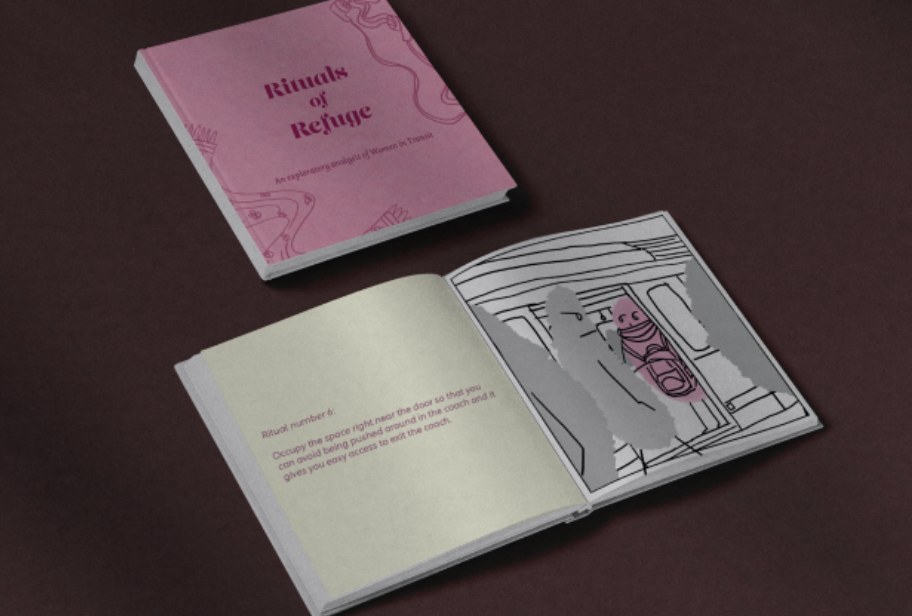
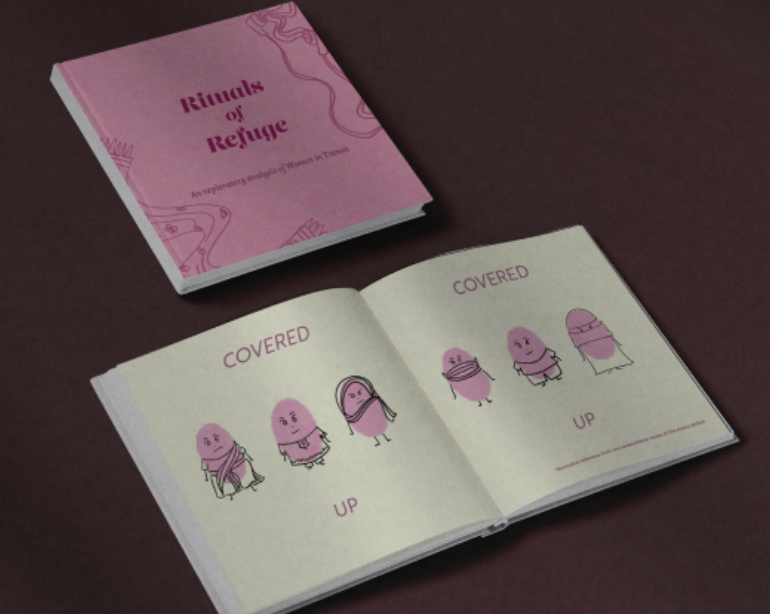
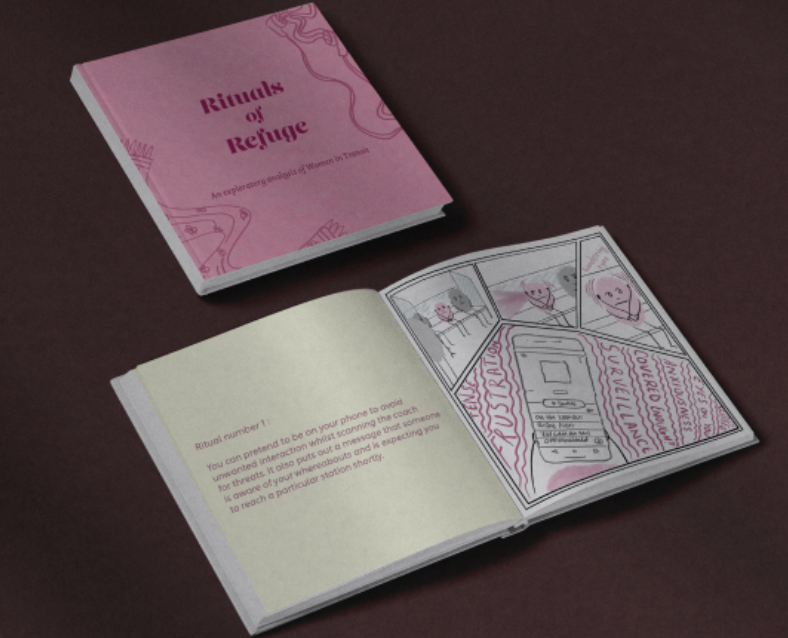
A guideline book for developing "Public Behaviour" — aimed at instilling a mindset of creating safer spaces for women among boys from a young age. Alongside this, animation scripts were crafted for display in metro coaches and stations, encouraging men to be mindful of their actions through small, everyday gestures.
The research combined participatory methods, on-site observation, and secondary literature — designed to surface the emotional and behavioural dimensions of transit that traditional infrastructure studies miss.
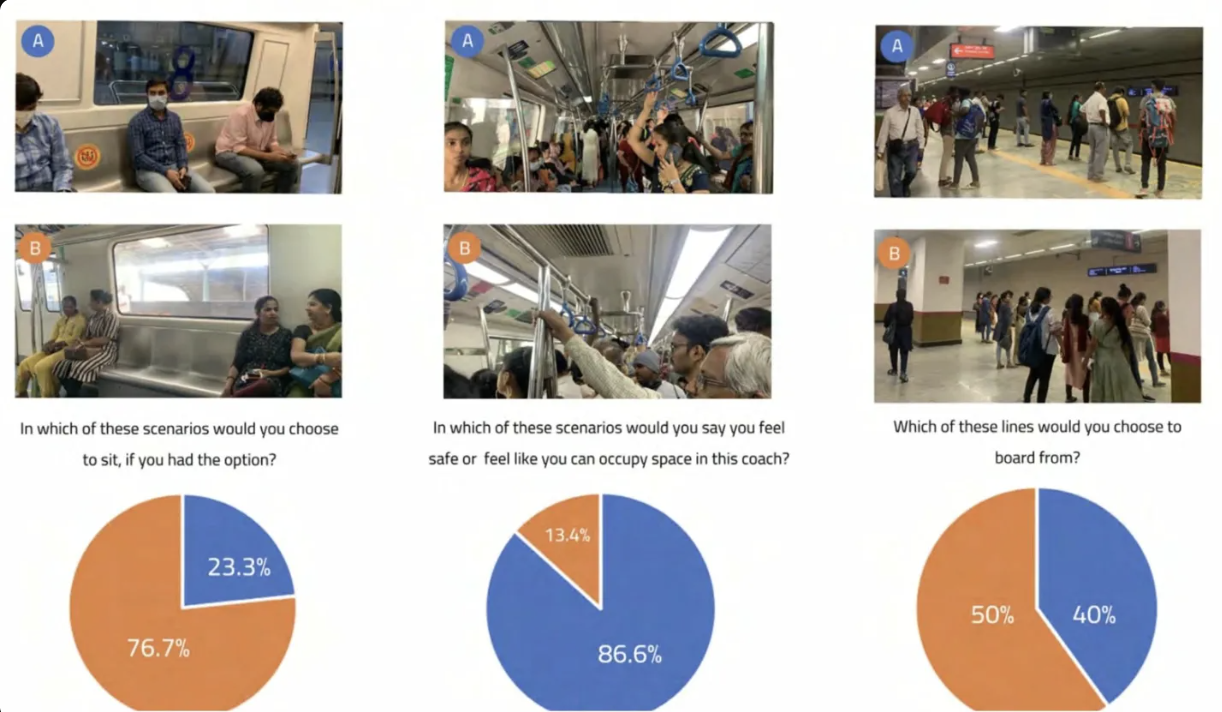
Games, image mapping, and scenario activities designed to surface emotions and decision-making processes that women find difficult to articulate directly.
2-minute conversations with commuters on-site — 30 interviews total, all conducted with consent. Participants were told this was part of a research project to ensure informed, comfortable sharing.
Existing literature, case studies, and documented activities around gender and public transit — used to frame hypotheses and identify the gaps the fieldwork needed to fill.
Stakeholder mapping, urban flow analysis, neighbourhood image documentation, and strength/weakness (emotion) mapping across multiple metro stations.
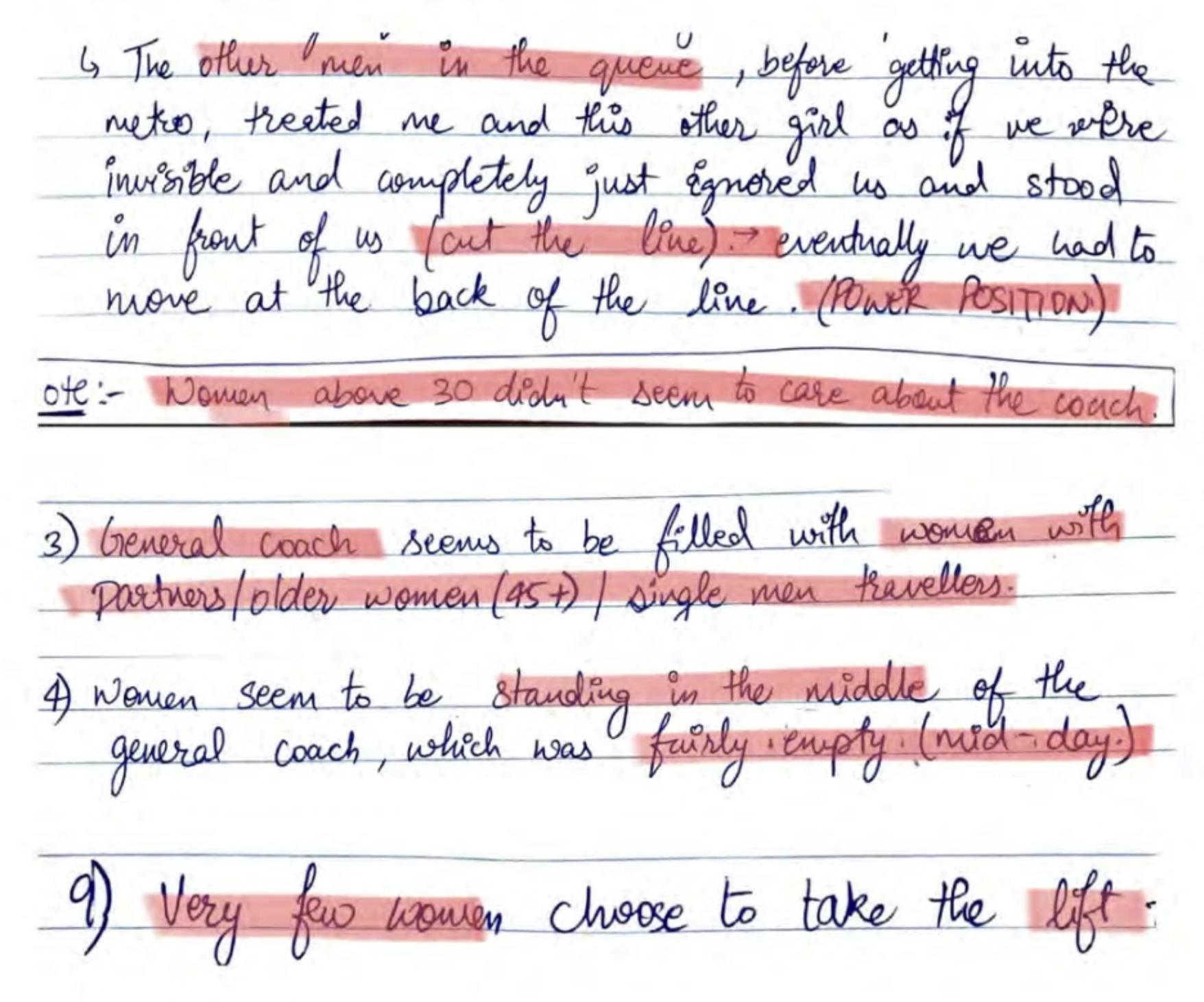
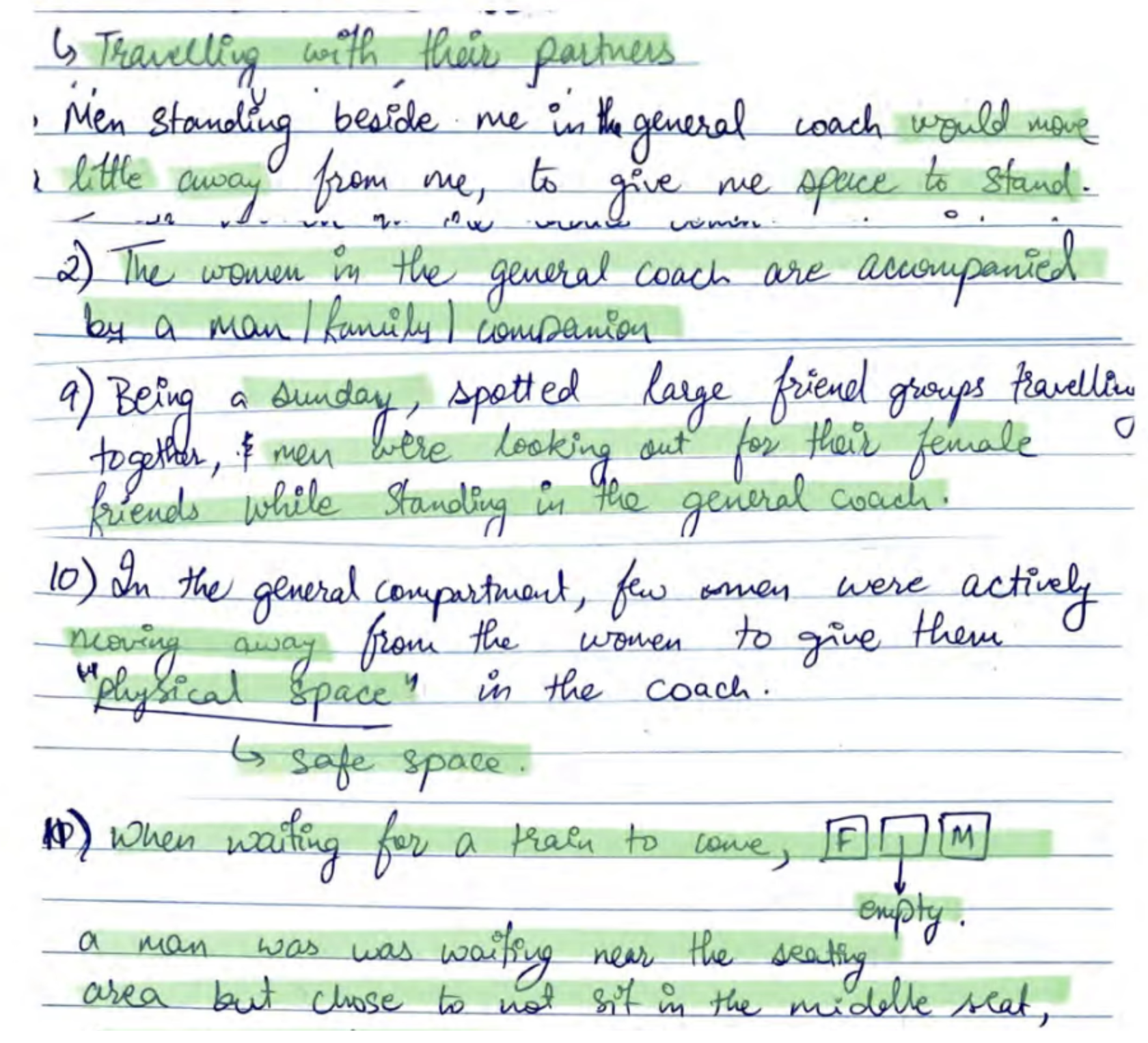
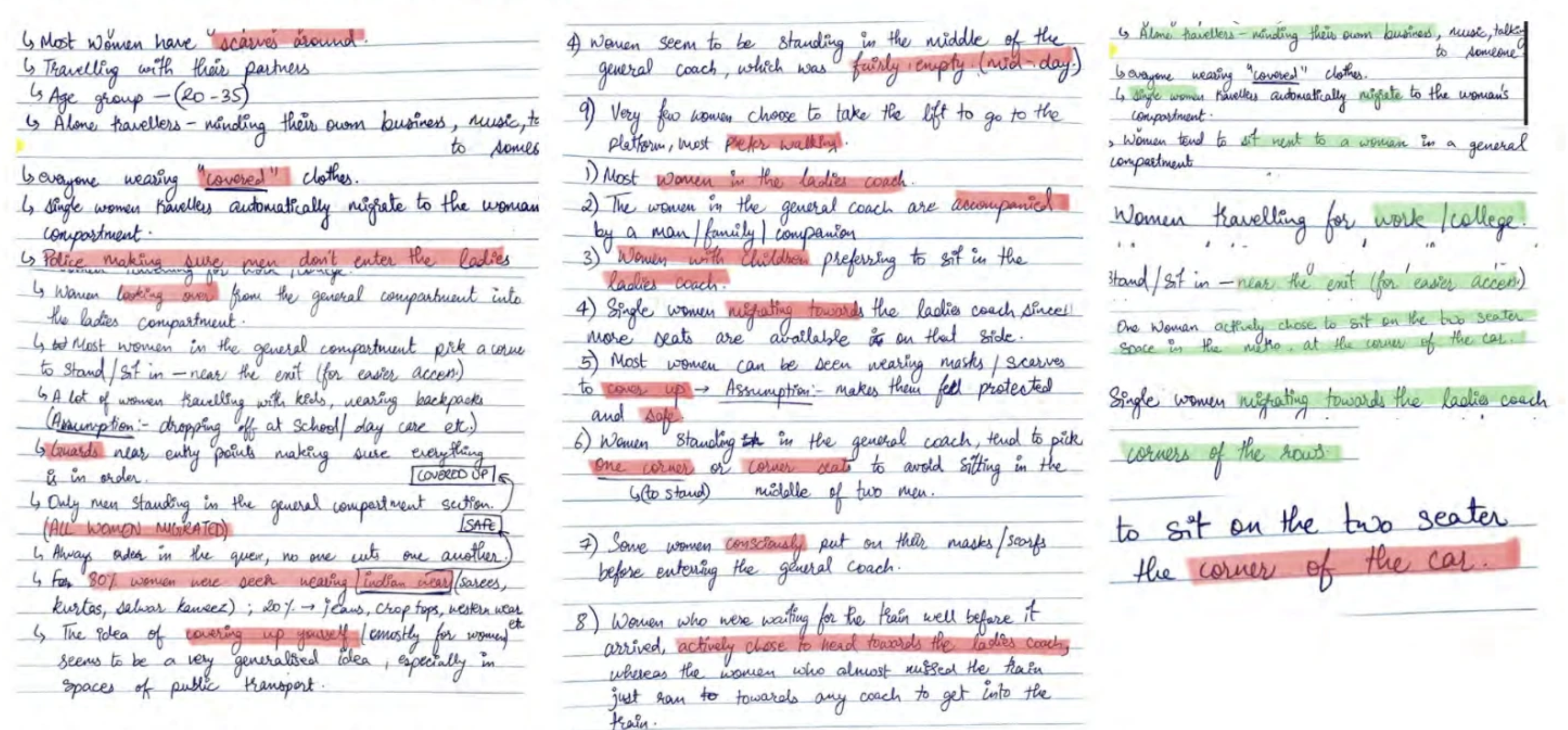
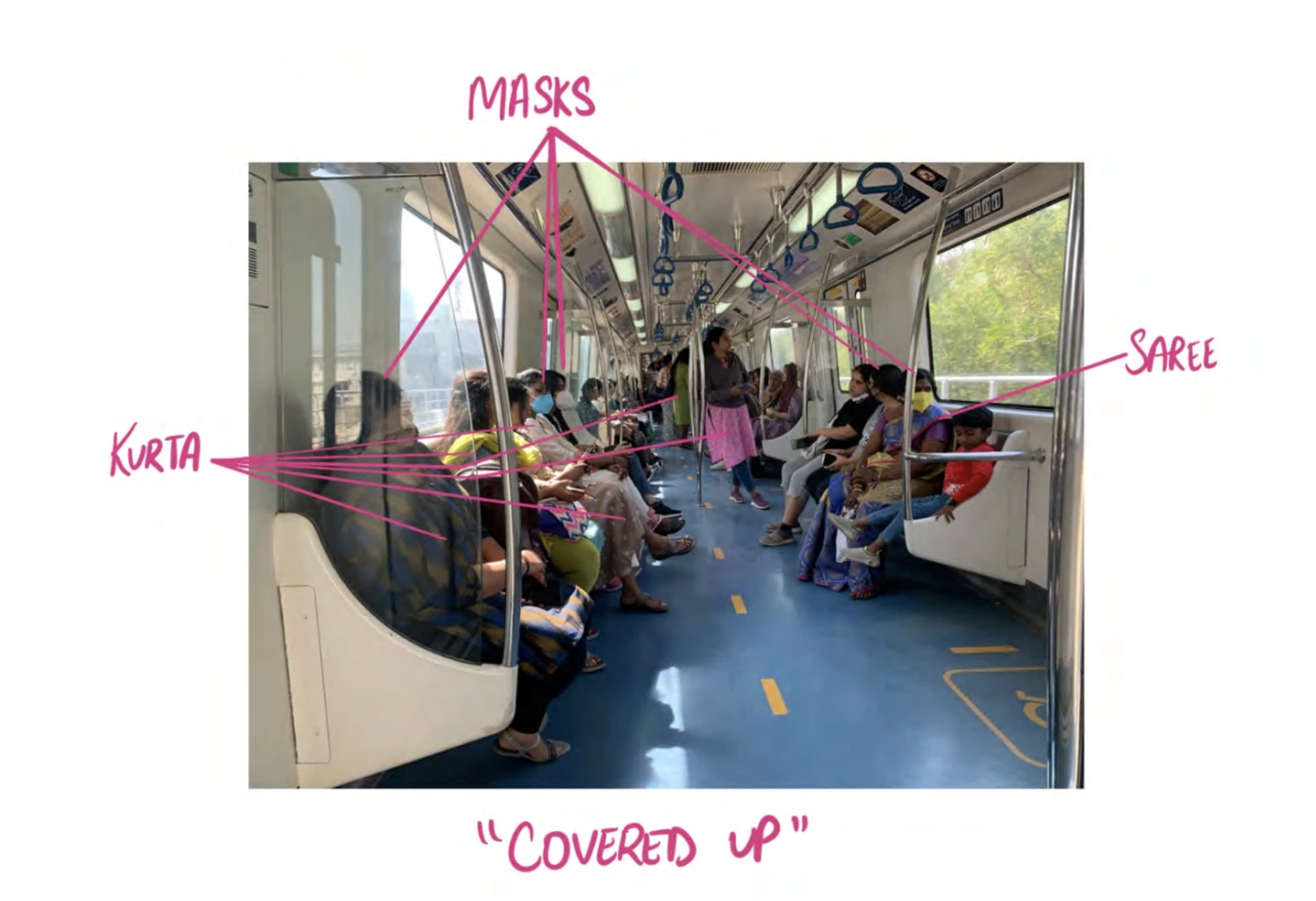
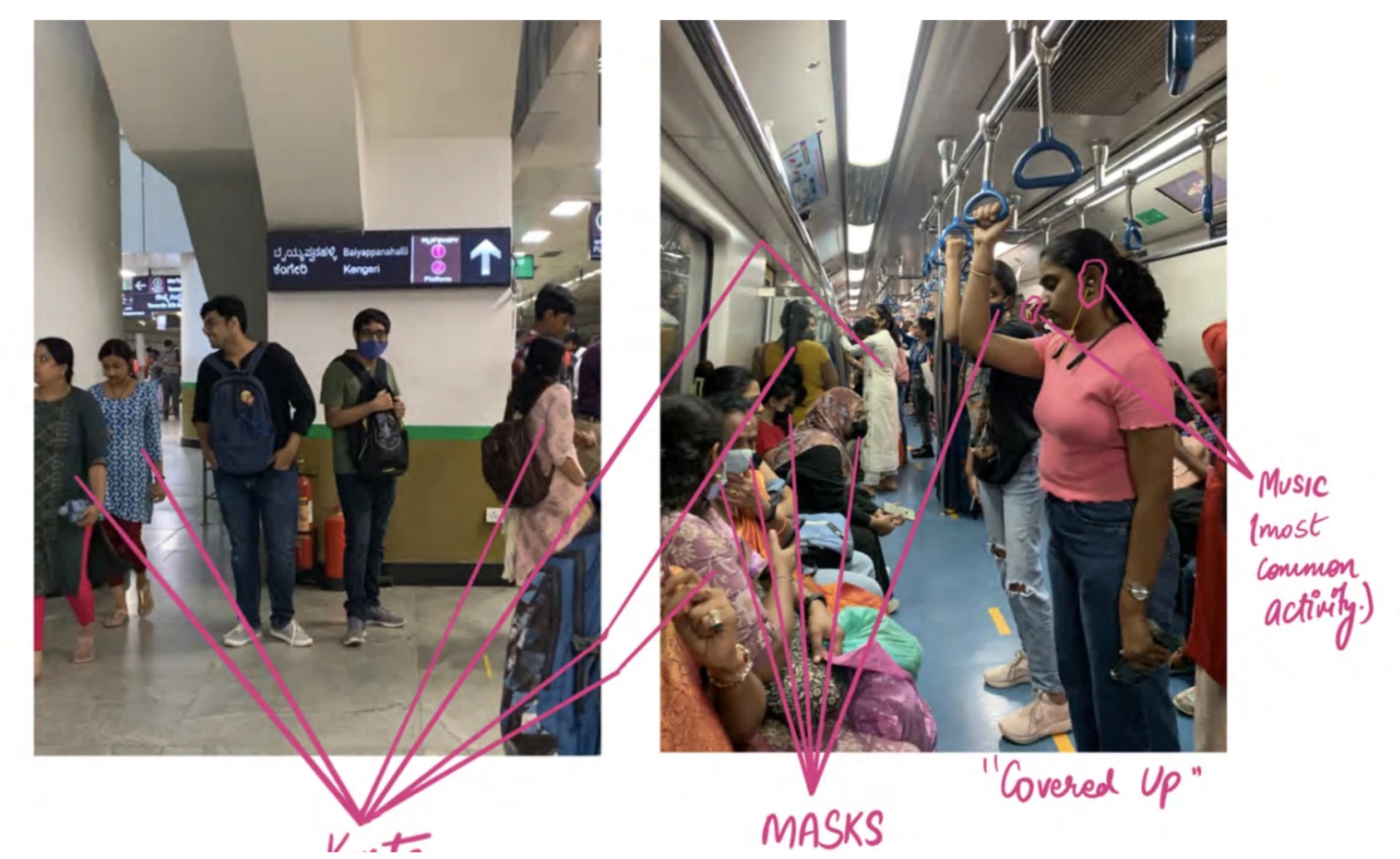
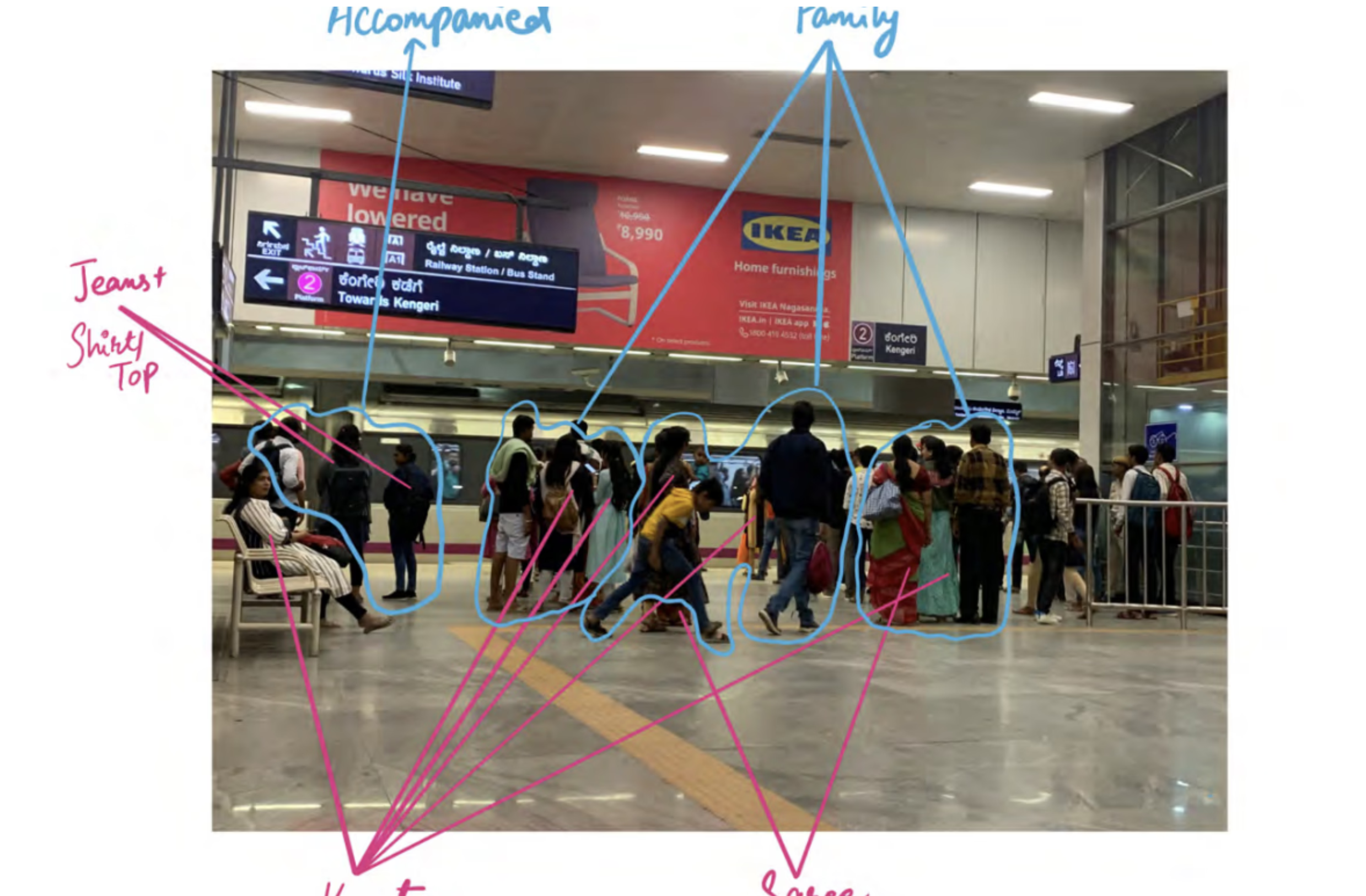
The fieldwork surfaced nuanced, age-specific behavioural differences and practical strategies that women use every day — most of which are completely invisible to the infrastructure designers who shape their journeys.
Women below and above 28 showed clear differences in decision-making. Older women tended to rely on "bold actions" when faced with harassment, while younger women employed quieter avoidance tactics.
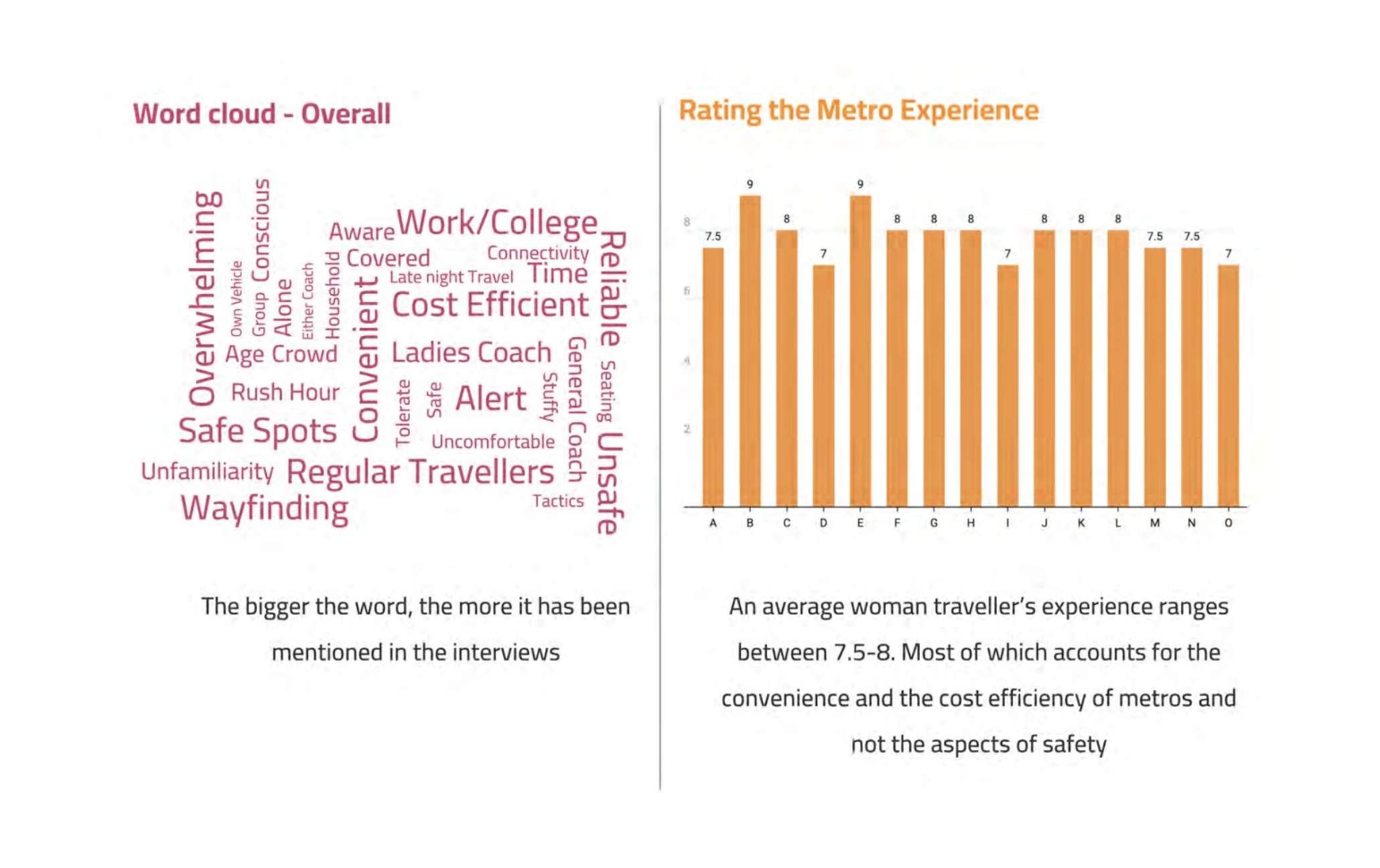
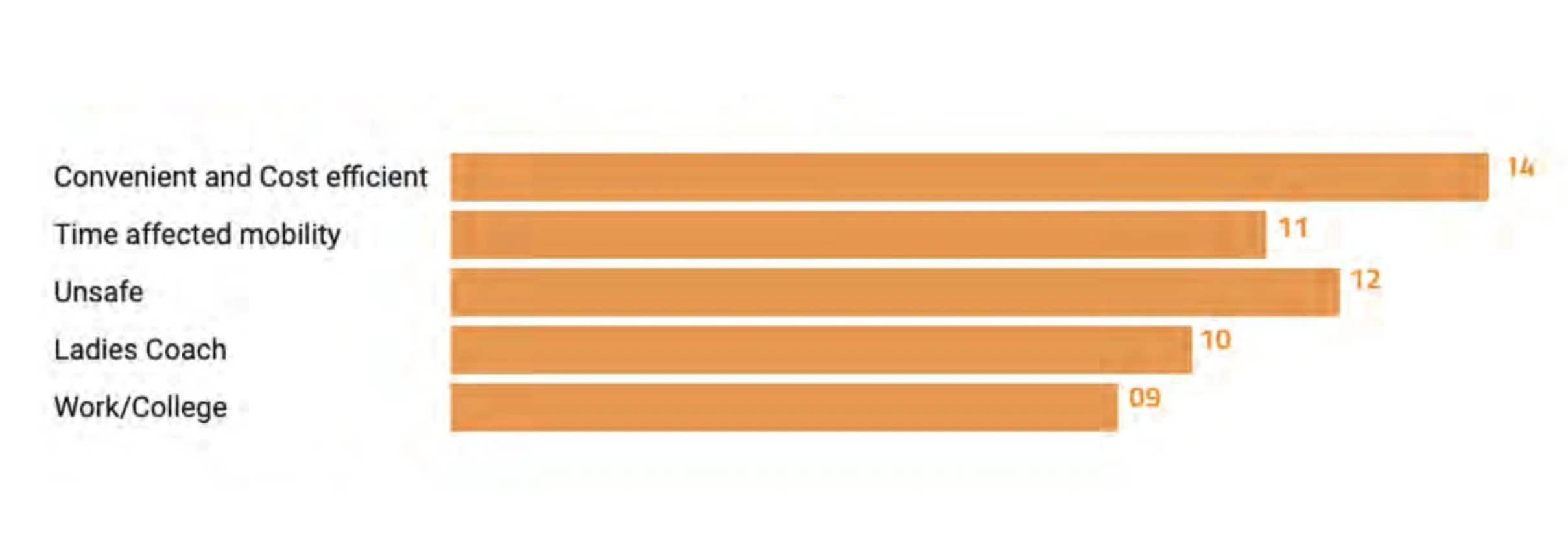
The average experience rating was 7.8 out of 10 — and safety was consistently the most common reason for the reduction, regardless of age or journey type.
Female guards at ladies' coaches existed only at the main Majestic station. The infrastructure meant to protect women was almost entirely absent at smaller stops.
During rush hours, women consistently preferred the ladies' coach — not just for safety, but to allow themselves a "relaxed state" after a long day. Time and mental load are deeply intertwined.
Women travelling in groups of 4–5 would huddle and create their own protective space — an informal, spontaneous safety infrastructure built by the women themselves.
Contrary to assumptions, some men actively created physical distance between themselves and women in the carriage — indicating that body language plays a real, nuanced role in safety perception.
All 30 participants gave their consent to take notes and to be recorded.
View All Interview Recordings ↗To better understand the interview responses, word clouds were created for each participant — surfacing recurring language, emotions, and themes that might be missed in a linear read-through.
The research produced three tangible outputs — a visual journal, a public behaviour guideline book, and animation scripts for metro stations — all aimed at making future mindsets and infrastructure more considerate of the daily challenges women face in public transit.
What the research showed: women's experiences of transit are shaped not just by infrastructure, but by cultural mindsets, social power dynamics, and the quiet, constant labour of staying safe. Designing for inclusivity means designing for all of that — not just the physical environment.